

 All products
What Is a Condom?


A condom is a thin, flexible sheath designed to act as a barrier during sexual activity. Its primary purpose is to prevent sperm from entering the vagina while also reducing the transmission of viruses and bacteria that cause sexually transmitted infections.
Condoms are available in different sizes, materials, and styles to suit individual preferences. When used properly every time you have sex, they provide reliable protection against many common STIs and pregnancy.
Benefits of Using Condoms
Condoms offer several important health benefits, including:
- Help prevent unintended pregnancy.
- Reduce the risk of sexually transmitted infections such as HIV, chlamydia, gonorrhea, and hepatitis B.
- Easy to purchase without a prescription.
- Affordable and widely available.
- Safe for most people to use.
- Can be combined with other birth control methods for additional pregnancy protection.
How Effective Are Condoms?
When used correctly and consistently, condoms are approximately 98% effective at preventing pregnancy. With typical use, which includes common user mistakes, effectiveness is around 87%.
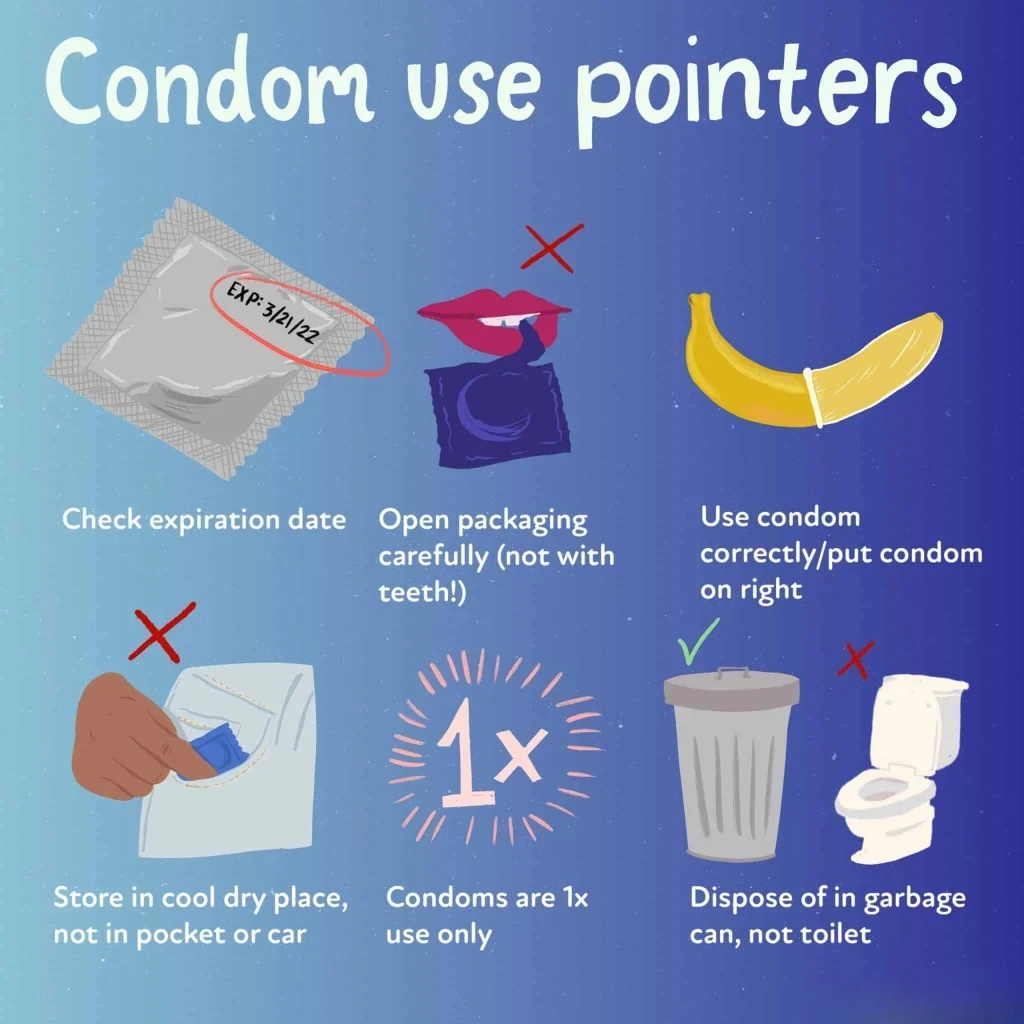
Proper use is essential. Incorrect application, expired condoms, improper storage, or damage during use can reduce their effectiveness.
Common Reasons Condoms Fail
Most condom failures result from user error rather than product defects. Common mistakes include:
- Putting the condom on incorrectly.
- Using an expired condom.
- Opening the package with sharp objects or teeth.
- Using too little lubricant.
- Using two condoms at the same time.
- Reusing a condom.
- Using a condom that does not fit properly.
- Allowing genital contact before putting on the condom.
Following the manufacturer’s instructions carefully helps minimize these risks.
Types of Condoms
Several types of condoms are available to meet different needs.
External Condoms
Also called male condoms, these fit over the penis and are the most commonly used type.
Internal Condoms
Also known as female condoms, these are placed inside the vagina before intercourse.
Dental Dams
Dental dams are thin protective sheets used during oral sex to reduce the risk of STI transmission.
Finger Condoms
Finger condoms, or finger cots, are designed for digital penetration and can provide additional protection during intimate contact.
Condom Materials
Condoms are manufactured using different materials.
Latex
Latex condoms are the most common option and offer excellent protection against pregnancy and most STIs. They should only be used with water-based or silicone-based lubricants.
Plastic (Non-Latex)
Polyurethane, polyisoprene, and nitrile condoms are suitable alternatives for individuals with latex allergies.
Natural Skin
Natural skin condoms help reduce the risk of pregnancy but are not recommended for preventing STIs because microscopic pores may allow viruses and bacteria to pass through.
Lubricated vs. Non-Lubricated Condoms
Lubricated condoms help reduce friction during intercourse, lowering the chance of tearing or breakage. Some include spermicidal lubricant for additional pregnancy prevention.
Non-lubricated condoms allow users to choose their preferred lubricant and may be preferred by individuals with lubricant sensitivities.

How to Use a Condom Correctly
For maximum protection:
- Check the expiration date.
- Carefully open the package without sharp objects.
- Ensure the condom is facing the correct direction.
- Place it on an erect penis before any genital contact.
- Pinch the tip to remove air.
- Roll it down completely to the base.
- Hold the base while withdrawing after ejaculation.
- Dispose of the used condom in a trash bin.
Never reuse a condom or use two condoms simultaneously.
Proper Storage
Store condoms in a cool, dry place away from direct sunlight. Avoid keeping them in wallets or pockets for extended periods, as heat and friction can damage the material.
Always check the expiration date before use.
What to Do If a Condom Breaks
If a condom breaks during intercourse:
- Consider emergency contraception if pregnancy is a concern.
- Consult a healthcare provider about STI testing, including HIV testing if appropriate.
- Avoid waiting if emergency contraception is needed, as it is most effective when taken as soon as possible.
Alternatives to Condoms
Other birth control options include:
- Birth control pills
- Birth control implant
- Birth control patch
- Intrauterine device (IUD)
- Spermicide
- Vasectomy
While these methods help prevent pregnancy, most do not protect against sexually transmitted infections. Condoms remain one of the few contraceptive methods that help reduce the risk of both pregnancy and many STIs.
Conclusion
Condoms remain one of the safest, most affordable, and most accessible methods for protecting against sexually transmitted infections and unintended pregnancy. Choosing the correct size, using the condom properly every time, and storing it correctly can significantly improve its effectiveness. Practicing safe sex with consistent condom use is an important step toward protecting your own health and that of your partner.
Frequently Asked Questions
1. What is a condom used for?
A condom helps prevent pregnancy and reduces the risk of many sexually transmitted infections by creating a protective barrier during sexual activity.
2. How effective are condoms?
With correct use, condoms are about 98% effective at preventing pregnancy. Typical use results in about 87% effectiveness.
3. Can anyone buy condoms?
Yes. Condoms are available over the counter, and there is generally no minimum age requirement for purchasing them.
4. Do condoms expire?
Yes. Always check the expiration date before use because expired condoms are more likely to tear or fail.
5. Can condoms prevent all sexually transmitted infections?
Condoms greatly reduce the risk of many STIs but do not provide complete protection against infections that spread through uncovered skin-to-skin contact, such as genital herpes, genital warts, and syphilis.